


Bonded restoration
Our clinic will close at 8 PM Sat, Jun 27 and reopen for admissions 6 AM Mon, Jun 29. For true dental emergencies during the closure, please contact your nearest hospital emergency room.
Composite, amalgam, inlay, onlay — each has its place. The technique used to place a restoration affects sensitivity, longevity, and how the tooth feels for years afterward.
Differentiator
When patients ask which filling is best, the honest clinical answer is: it depends on the case, and the technique used to place it matters at least as much as the material itself. A well-bonded composite, placed under proper isolation, in controlled increments, with the right light-curing protocol, can last 10–15 years and produce minimal post-operative sensitivity. The same composite placed without those steps can fail in 2–3 years and leave the tooth sensitive for months.
Keeps saliva and moisture away from the tooth during bonding.
Chemical bond to enamel and dentin.
Thin layers under 2mm, light-cured one at a time, minimizes shrinkage stress.
Full manufacturer-recommended time with calibrated curing light.
Four main causes: inadequate moisture control, polymerization shrinkage stress, deep margins without proper liner, high bite. Good restorative technique addresses each of these. With proper isolation, incremental layering, and a careful bite check, most patients experience no lasting sensitivity. If sensitivity persists past 2–3 weeks, it usually means the bite needs adjustment or rarely the nerve is reacting; both are fixable.
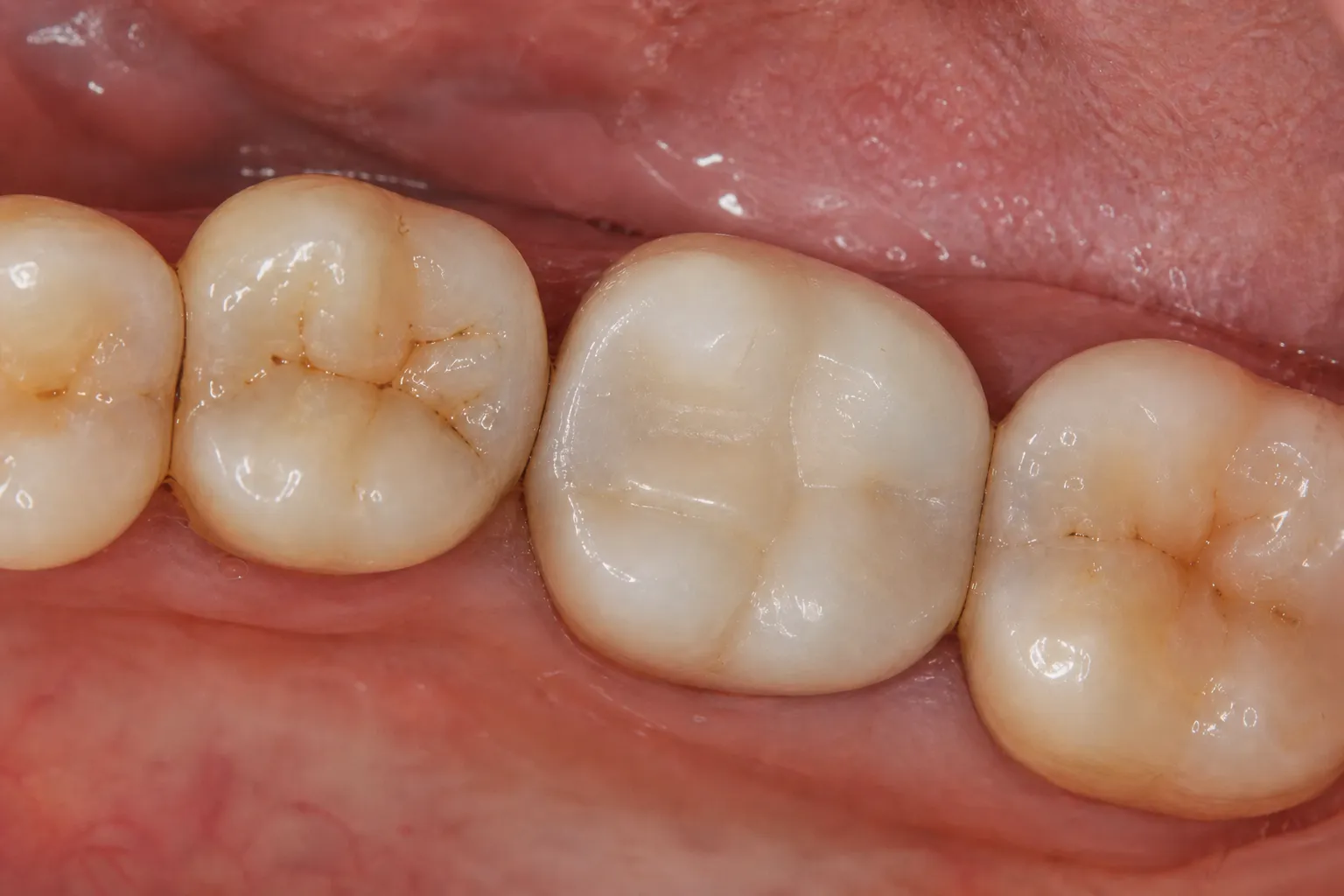
Tooth-coloured. Best for small–moderate cavities. Bonded to tooth. Typical longevity 10–15 years with good technique.
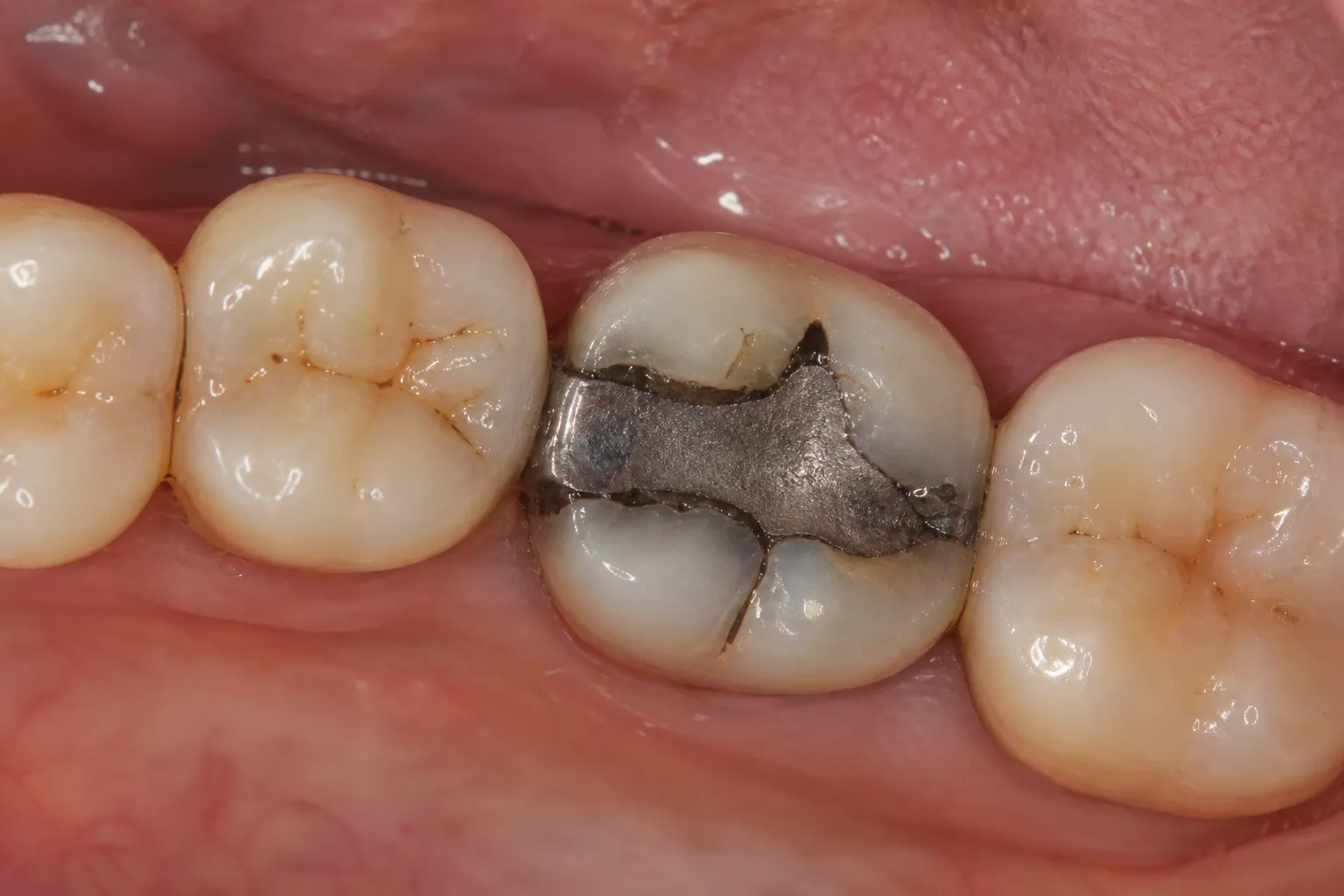
Clinically reliable in certain cases. Health Canada/FDA/WHO reviewed. We do not place amalgam routinely.
Fabricated outside mouth. Stronger for large cavities crossing cusps. Often same-day with our milling system.
Small to moderate cavities suit direct composite; once a cavity extends across cusp tips on molars/premolars, direct filling has to do too much work — risk of flexure, cracks, sensitivity, fracture. Inlays/onlays/crowns are more conservative long-term because the restoration is stronger, bonding is done under perfect isolation, and cusps are protected.
For many inlay and onlay cases, we can use our same-day in-office milling system.
Learn about same-day crowns and onlays →Dental amalgam has been used safely for over 150 years and remains clinically reliable in certain cases. Health Canada, FDA, and WHO have reviewed amalgam safety and concluded it is safe for most patients. We do not place amalgam routinely — for most patients we recommend bonded composite or ceramic restorations. If you have existing amalgam fillings that are functioning well, replacing them solely for cosmetic or non-clinical reasons isn't always necessary.
Local anesthesia for comfort.
Minimal removal with magnification.
Rubber dam placed.
Etch + bonding agent applied.
Composite layered or inlay/onlay/crown bonded in.
Articulating paper and final polish.
What to expect in the first 24–48 hours.
Mild sensitivity to cold or pressure is normal — usually resolves within a week. Sensitivity worse after 5–7 days → call us, bite adjustment usually fixes it. Pain waking you at night → call us. Feeling tall on biting → call us, we adjust same-day at no charge. Floss catching → call us, we polish the margin.
Filling and bonded restoration fees follow the ODA Suggested Fee Guide. Most extended health insurance plans cover composite fillings at 80–100% up to annual maximum. Inlays, onlays, and crowns typically covered at 50% under major restoration provisions. CDCP covers basic restorative procedures for eligible patients.
Check Insurance Coverage →Meet your clinician
One relevant face at the decision point — see the full team for everyone else.
Case examples
Drag the slider to compare each case.
Individual results vary. Photos are shown only with written patient consent.
Restoration suitability depends on the clinical situation. Your dentist will discuss whether a filling, inlay, onlay, or crown is the right choice.
Good to know
Still have a question? Our team is happy to help over the phone.
(416) 483-0000Sensitivity after a filling can come from several things — incomplete moisture control during bonding, shrinkage stress on the tooth, deep proximity to the nerve, or the bite being slightly high. In most cases, it's preventable with careful technique: rubber dam isolation, layered placement, proper light-curing, and a careful bite check at the end. If you've had repeated sensitivity from fillings done elsewhere, it's worth discussing the technique we use here — many patients tell us their new restorations feel completely different.
Not automatically. If your existing amalgam fillings are sound — no cracks, no leakage, no decay around the edges — there's no clinical reason to replace them based on the material alone. Health Canada, the FDA, and the WHO have reviewed dental amalgam and concluded it's safe for most patients. We discuss replacement when there's a clinical indication: visible cracks, leakage, recurrent decay underneath, fracture, or cosmetic concerns the patient raises.
A direct filling is placed in your tooth in layers and shaped by hand — the right choice for small to moderate cavities. An inlay or onlay is fabricated outside your mouth (either same-day in our milling system or by a dental lab) and then bonded into your tooth. We recommend inlays and onlays for larger cavities — especially those crossing the chewing surface or extending over cusps — because the fabricated restoration is stronger, more dimensionally stable, and protects the tooth from flexure.
With proper technique and good oral hygiene, composite restorations typically last 10–15 years. Amalgam restorations historically lasted 15–20+ years, partly because the material is less technique-sensitive. Modern bonded composites have closed much of that gap when placed correctly. The biggest variable in restoration longevity isn't the material itself — it's whether the placement technique was rigorous, plus your bite forces and home care.
Usually because the cavity is large enough that a direct filling would have to do too much structural work. Once a cavity crosses one or both of the chewing-surface cusps on a back tooth, a direct composite is at higher risk of flexure under chewing forces — which can lead to sensitivity, cracks, and eventual fracture. An onlay (which covers and protects the cusps) or a crown (which covers the whole tooth) takes that load off the remaining tooth structure.
Most extended health dental insurance plans cover inlays and onlays under their 'major restoration' provisions — typically at 50% up to your annual or lifetime maximum. We submit a pre-treatment estimate to your insurer. Composite and amalgam fillings are usually covered under 'basic restoration' provisions at 80–100%. CDCP covers some restorative procedures for eligible patients.
A rubber dam is a thin sheet of latex (or non-latex material) placed around the tooth being treated. It keeps saliva, moisture, and breath out of the working area. For any bonded restoration, this is the difference between a reliable bond and an unreliable one — moisture contamination during bonding is one of the leading causes of restoration failure and post-op sensitivity. We use it routinely. Most patients find it more comfortable than they expect.
Modern dental composites are extensively studied and approved by Health Canada and the FDA. Composites contain a resin matrix and a ceramic filler. There has been research interest in low-level Bisphenol A (BPA) exposure from some older composites, but current materials are formulated to minimize this and exposure from a polymerized restoration is well below safety thresholds. If you have specific medical or chemical sensitivities, we can discuss material options including BPA-free composites and ceramic restorations.
Booking · Placeholder
Live online scheduling (real-time calendar slots) is being connected. Until then, call us for same-day availability or use the contact form.